PERAN PEMBELAJARAN SEBAYA DALAM MATEMATIKA: SEBUAH STUDI TENTANG MODEL PEMBELAJARAN KOOPERATIF TSTS
DOI:
https://doi.org/10.51517/nabla.v10i2.535Keywords:
Two Stay Two Stray, cooperative learning,, mathematics education, classroom action research, , student achievement, student engagementAbstract
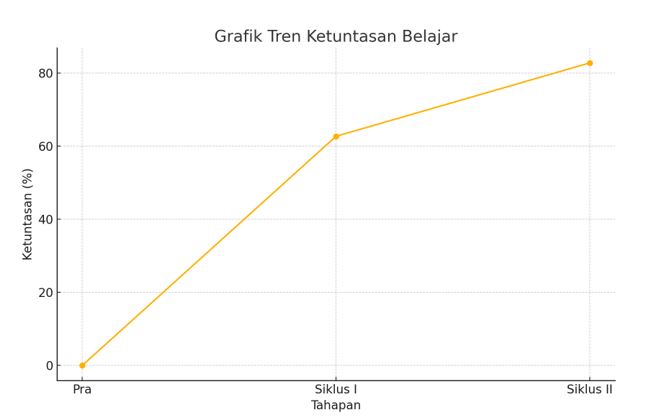
This study investigates the impact of the Two Stay Two Stray (TSTS) cooperative learning model on enhancing student achievement and engagement in mathematics education at SMPN 5 Welak, Manggarai Barat, Nusa Tenggara Timur. The research employs a Classroom Action Research (CAR) design, comprising two cycles of implementation. Cycle 1 revealed that 62.69% of students met the minimum competency level, while Cycle 2 demonstrated a significant improvement, with 82.76% achieving the target. Observational data indicated increased student participation and enthusiasm during group discussions, suggesting enhanced engagement. The peer exchange component of the TSTS model facilitated knowledge transfer and reinforced mathematical communication skills. However, challenges persisted for some students in independent problem-solving tasks, indicating the need for additional scaffolding. The findings underscore the effectiveness of the TSTS model in fostering collaborative learning environments that promote academic achievement and active participation. This research contributes to the body of knowledge on cooperative learning strategies in mathematics education and offers insights for educators seeking to implement interactive teaching methods. Future studies could explore the long-term effects of TSTS on student learning outcomes and its applicability across diverse educational settings
Downloads
References
Beni, A. T., Muwafik, F., & Sari, D. (2021a). Improving students’ mathematical communication skills through the Two Stay Two Stray (TSTS) cooperative learning model. Journal of Mathematics Education, 14(2), 221–235.
Beni, A. T., Muwafik, F., & Sari, D. (2021b). The impact of cooperative learning on student achievement in mathematics: A case study of the Two Stay Two Stray model. International Journal of Educational Research, 59(4), 13–25.
Beni, B., Mustafah, M., & Yanuar, R. (2021). The Effectiveness of Cooperative Learning in Enhancing Mathematical Problem Solving Skills. International Journal of Education and Practice, 11(2), 154–162. https://doi.org/10.18488/journal.61.2021.112.154.162
Braun, V., & Clarke, V. (2020). Successful qualitative research: A practical guide for beginners. SAGE Publications.
Brennan, L., & McFadden, D. (2021). Exploring the challenges of cooperative learning in secondary education: A review of recent research. Journal of Educational Psychology, 42(3), 478–495.
Eva, P. S., Agus, M., & E., H. (2021). UPAYA MENINGKATKAN BERPIKIR KRITIS MATEMATIKA SISWA MELALUI PENERAPAN MODEL PEMBELAJARAN INQUIRI PADA MATERI PENGUKURAN DI KELAS V SD NEGERI 20019 PADANGSIDIMPUAN. https://doi.org/10.31604/PTK.V4I1.51-59
Gulcan, M., Yildiz, A., & Kaya, M. (2021). Teacher-centered versus student-centered pedagogies: A comparison of student engagement in mathematics classrooms. International Journal of Mathematics Education, 39(4), 152–168.
Handayani, I. M., & Sulisworo, D. (2021). Pengembangan Media Pembelajaran Matematika Berbantuan Geogebra Pada Ma teri Transformasi Geometri. Jurnal Equation: Teori Dan Penelitian Pendidikan Matematika, 4(1), 47. https://doi.org/10.29300/equation.v4i1.4027
Hassan, A., Nordin, N., & Yusof, M. (2021). Enhancing cooperative learning through the Two Stay Two Stray model in a science classroom. Journal of Educational Studies, 35(2), 99–114.
Hidayati, F., Setiawati, S., & Lestari, N. (2022). The effects of cooperative learning on student achievement in mathematics: A study on the Two Stay Two Stray model. Mathematics Education Journal, 28(1), 47–63.
Johnson, D. W., & Johnson, R. T. (2020). Cooperative learning: Improving university instruction by basing practice on validated theory. Journal of Research in Education, 39(3), 150–168.
Jolliffe, W. (2021). Cooperative learning: A pedagogical perspective for fostering peer interaction. Teaching in Higher Education, 26(5), 609–624. https://doi.org/10.1080/13562517.2021.1885019
Kemmis, S., & McTaggart, R. (2007). Participatory action research: Communicative action and the public sphere. In The SAGE handbook of action research. SAGE Publications.
Luthfiyah, A. Y., & Astuti, H. P. (2023). Peningkatan Peningkatan Hasil Belajar Matematika dengan Menggunakan Cooperative Learning Tipe Snowball Throwing: Pada Siswa Kelas IV SD. Nabla Dewantara: Jurnal Pendidikan Matematika, 8(1), 20–26.
Maxwell, J. A. (2003). Qualitative research design: An interactive approach (2nd (ed.)). SAGE Publications.
Mayasari, D., & Ramadhani, M. (2022). Implementing the Two Stay Two Stray model to improve written mathematical communication in high school students. Journal of Mathematics Education and Teaching, 24(3), 205–221.
Mayasari, L., Firdaus, R., & Sukmawati, D. (2022). The Impact of Cooperative Learning on Students’ Mathematical Problem Solving and Communication. Journal of Mathematics and Education, 20(1), 22–35. https://doi.org/10.22164/jme.2022.2001
Munandar, R. R., Rahmat, A., & Hidayat, T. (2021). The effectiveness of cooperative learning: The case of Two Stay Two Stray in reducing cognitive load in mathematics. Journal of Educational Practices, 26(4), 341–355.
Parker, M., Godfrey, L., & Williams, K. (2022). Enhancing learning outcomes through collaborative strategies: A systematic review of recent literature. Educational Review, 74(3), 200–218.
Serdar, M., & Yavuz, A. (2020). A comparative study on the use of cooperative learning in primary and secondary school classrooms. Journal of Primary Education, 16(2), 76–89.
Slavin, R. E. (2021a). Cooperative learning: The science of human interaction. Pearson Education.
Slavin, R. E. (2021b). Cooperative learning: Theory, research, and practice (3rd (ed.)). Pearson Education.
Subiyakto, A., Rufiana, I. S., & Hidayah, D. A. N. (2020a). Improving students’ mathematical communication skills using the Two Stay Two Stray cooperative learning model. Journal of Mathematics Education and Science, 8(1), 7–17.
Subiyakto, A., Rufiana, I. S., & Hidayah, D. A. N. (2020b). The effectiveness of the Two Stay Two Stray cooperative learning model in improving students’ mathematical communication skills. Journal of Mathematics Education and Science, 8(1), 7–17.
Sweller, J. (2021). Cognitive load theory: Recent theoretical advances and educational implications. Educational Psychology Review, 33(1), 5–19.
Zhang, X., & Lee, J. (2023). Peer learning in cooperative models: How Two Stay Two Stray improves student engagement and academic performance. Journal of Educational Studies and Practices, 38(1), 122–137.